

Jean Bosco NTAGWABIRA
Property&Damp Surveyor
Dip in Arch. Draughting
Bcom Hnrs in Bus Management
BACKGROUND
Architect JB Ntagwabira has Over 15 years of experience both in Rwanda and South Africa in construction, including one year of intensive research on moisture problems in wall buildings. The Founder has accumulated in that time a wealth of technical knowledge in construction to be specific in moisture/humidity problems.
CONTACT US
SERVICES WE OFFER:
1. Damp Survey(moisture problems in building walls )
2. Property Condition Inspection
1. Damp Survey(Moisture problems in Building Walls)
Damp Survey is a type of property inquiry and report that focuses on any damp issues
-Identifying root causes of Damp
-Identifying type of Damp
-A Short written report of a survey
-Damp treatment
-Rainwater collection systems
-House Drainage Systems
IDENTIFYING ROOT CAUSESDASUCO LTD uses a variety of criteria to determine whether moisture issues exist. We compile all relevant information about the problem and offer a thorough examination of the underlying reasons for your moisture. In order to evaluate and study the state of the property, our research team must consider a number of aspects. The first question to ask is: What is the issue? What impact does the issue have on the building walls? Etc.
IDENTIFYING TYPE OF DAMPA crucial phase in root cause analysis is Answering the question, "What are the contributing factors of the issue?" we make easier by recording all of the characteristics and specifications of the problem, is it a recurring problem? Does the event occur frequently? The team will utilise particular equipment and techniques, such as a moisture meter, Loss On Drying (LOD) including laboratory soil tests if necessary, and mortar permeability, to determine whether you have rising damp, penetrating damp, condensation, or salt attack because each issue is treated differently.
The majority of the homes we inspected in the Kigali area frequently exhibited “salts attack,” which is largely ignored by construction industry professionals, instead of reaching the moisture levels necessary to damage the building components.
RAINWATER COLLECTION SYSTEMSWater runoff is prevented by rainwater harvesting and collection. Straight off the roof, rainwater is gathered and directed to a deep pit, tank, or sewer system. The results of my investigation into the root cause of moisture in building walls, it has counted more than Fifty percent of the buildings under examination have moisture issues, and failing to implement rainwater collection systems will result in construction failures. Therefore, when we visit to carry out a damp survey at your property, DASUCO LTD’s first quantifiable factor to check is the rainfall transport systems.As a result, we take a tour at your property to examine the slope drainage system, which keeps structures away from the water by allowing water to run off of them downward. To remove water and direct it to the proper location, our crew must also evaluate gutter and downspout systems, among other drainage systems. Water flow surrounding the building is important to monitor and maintain the building’s protection; if correct drainage is established, moisture cannot seep into the walls.
The inspection also includes a look for any leaking pipes , Since internal drainage pipes and water supplies can occasionally result in intense dampness over time. Nothing is neglected during the drainage system inspection; we also look for anything that might allow water to seep beneath the floor and cause more issues.
A SHORT WRITTEN REPORT OF THE SURVEYA damp survey report will help you to understand the type of moisture issue that keeps happening at the house and outline the steps that must be taken to address it. As part of the survey, the team measures the amount of moisture within the property's walls using particular instruments and techniques. The report will be sent to the client or property owner following a thorough evaluation of the issue and the identification of the underlying cause. The discovered damp issue will be addressed next, along with the estimated cost of property repair.
DAMP TREATMENTOne of the common issues in houses, particularly houses of today, is damp rise. Because of its fundamental causes, rising damp is the most prevalent sort of wetness and the most challenging to manage. Once the cause of the problem and its sources have been identified, the last step is to cure or remove the moisture from the walls. Have you ever wondered the reason for dampness in walls or what causes damp in walls? This is the most challenging part of the process. Rising damp begins at a low level anAs an architect and construction manager with over 15 years of experience, I am conveying this warning to all homeowners. I have worked on a variety of construction projects, including general buildings, concrete work, reservoirs, and bridges. A few years ago, I made the decision to delve more into Rwanda’s moisture issues, which necessitated conducting a study to have a deeper understanding of the subject. There are a lot of contractors who operate on or inspect damp treatment without having any knowledge of the moisture issues. I have seen contractors who make a lucrative amount of money without fixing anything, sometimes making the situation worse. Before you consider hiring a contractor to complete your work, please do not hesitate to contact us for a free survey.
TIP OF ADVICE"WARNING"As an architect and construction manager with over 15 years of experience, I am conveying this warning to all homeowners. I have worked on a variety of construction projects, including general buildings, concrete work, reservoirs, and bridges. A few years ago, I made the decision to delve more into Rwanda’s moisture issues, which necessitated conducting a study to have a deeper understanding of the subject. There are a lot of contractors who operate on or inspect damp treatment without having any knowledge of the moisture issues. I have seen contractors who make a lucrative amount of money without fixing anything, sometimes making the situation worse. Before you consider hiring a contractor to complete your work, please do not hesitate to contact us for a free survey.
LET'S EXAMINE THE VAST MAJORITY OF THE UNDERLYING CAUSES OF DAMP ISSUES IN BUILDING WALLS:
1. RISING DAMP: When groundwater really seeps through the walls as moisture from the earth moves up them through porous materials. This occurs when your exterior walls’ damp-proof membrane breaks.
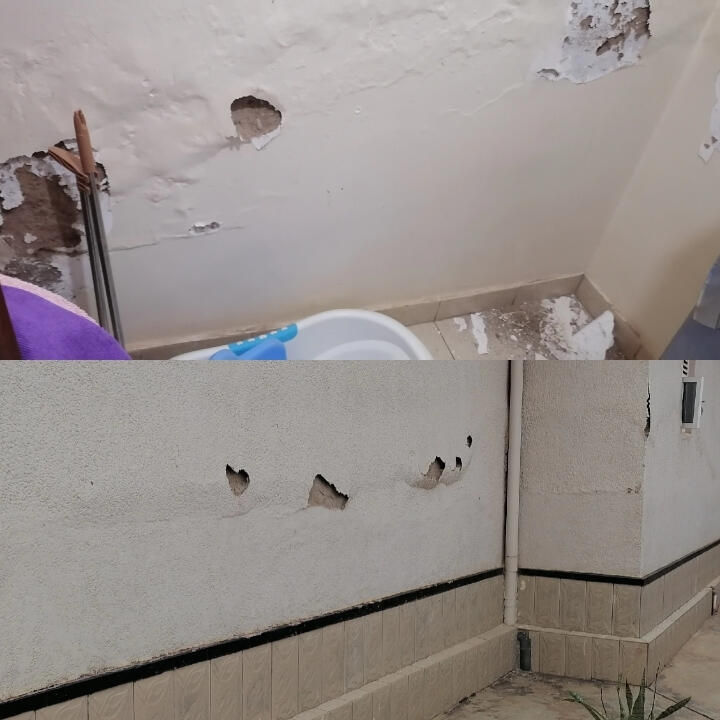
These Photos show damp rising that caused the damage to the walls of the building.
2. CONDENSATION:When hot, humid air interacts with, cools too quickly, it condenses back into water. Simply put, when warm, mostly inside air comes into contact with cooler wall surfaces condensation forms —which occurs when your home has inadequate ventilation.
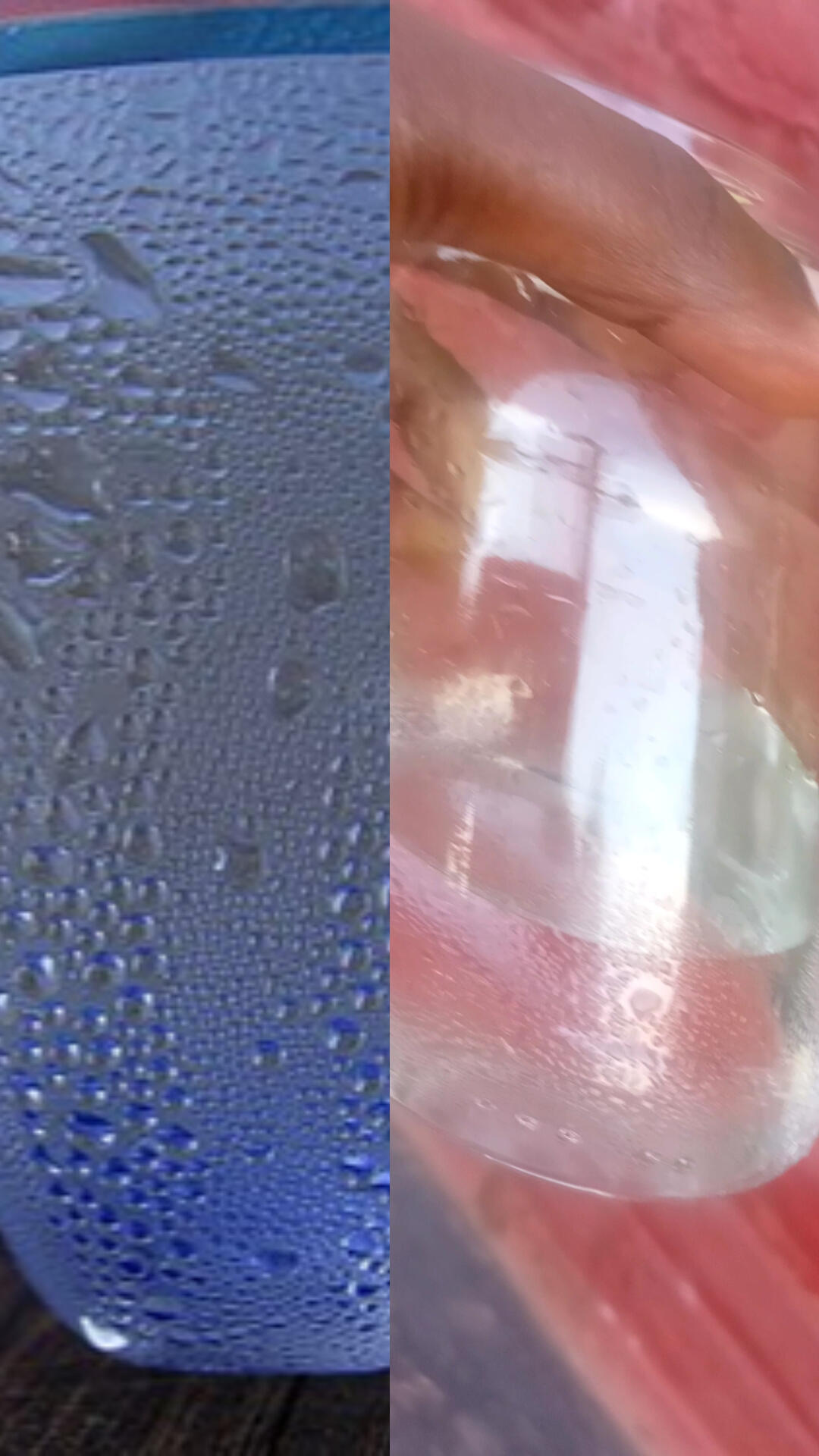
As you can see on the photos there is a plastic bottle and a glass bottle both with cold water, the glass bottle that I hold in my hand has been taken out from the fridge. after interacting with warm weather the bottle surface was condensed.
This phenomenon also applies to walls, for example if a wall is more humid than outside temperature, the condensation will form on the wall building.
3.LEAKING PIPES AND PLUMBING ISSUES:This is one of the main causes of moist interior walls, frequently brought on by ageing or faulty plumbing, and if ignored, can seriously damage your house. You’ll notice that mould begins to form and that there are wet areas on the walls.
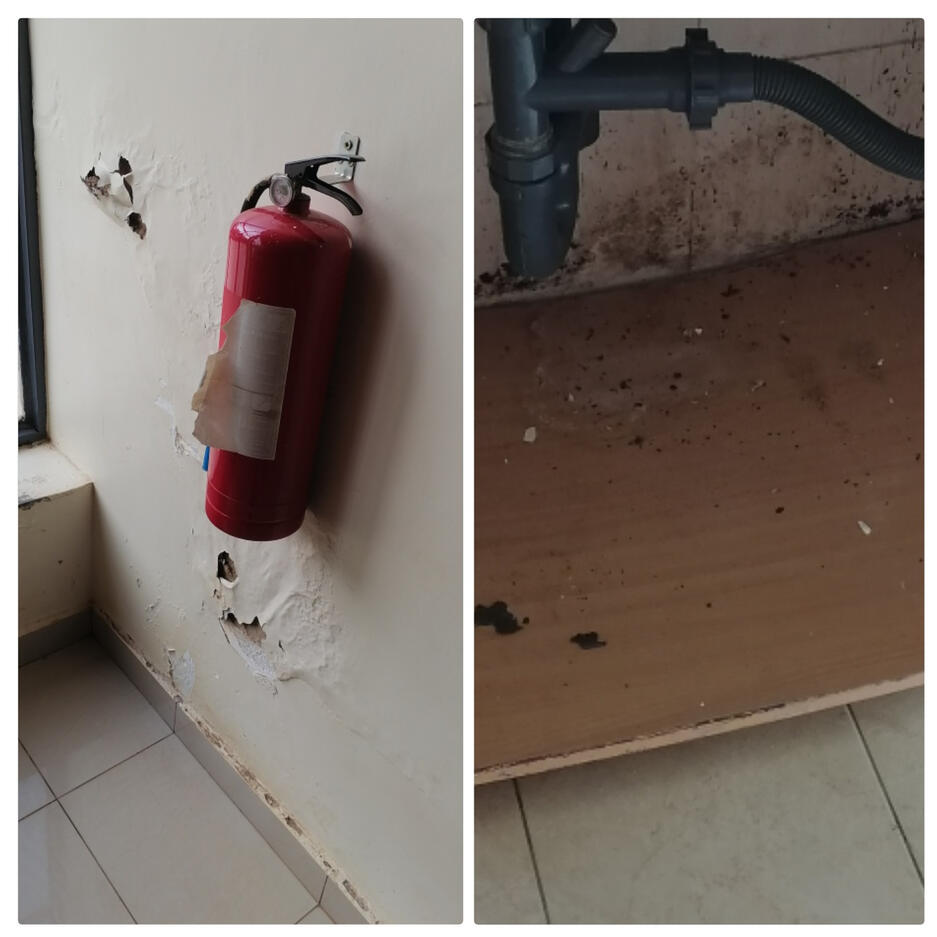
As you can see these photos , a pipe is leaking in the wall that caused the dampness on the other side of the wall.
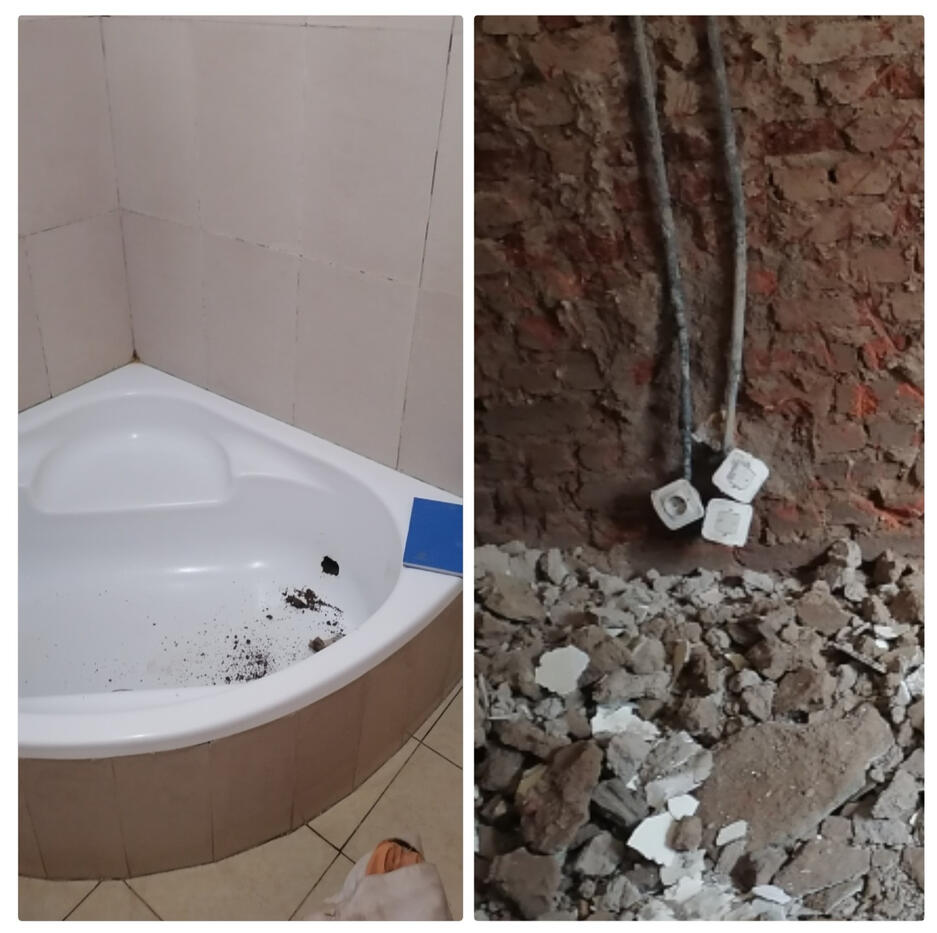
The Photo show a bathtub that was damaged (poked) which caused water penetration underneath he wall , and this has led moisture growth on the other side of the wall.
4. DEFECTIVE ROOFING:Water build-up on the roof or balcony due to a lack of drainage pipes may result in seepage into the walls.
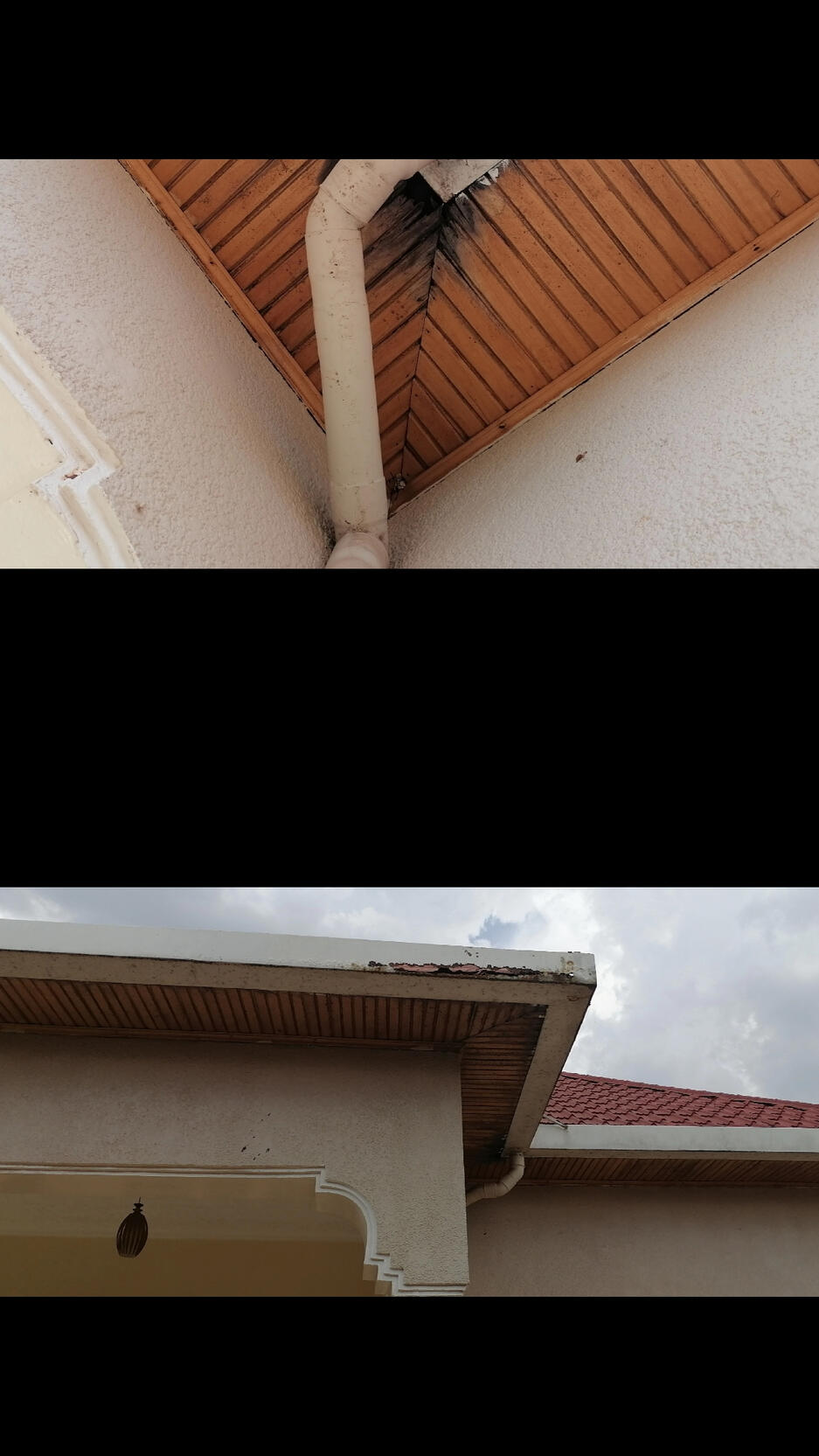
Due to lack of gutter slope, water always filled up inside the gutter , leaves and dust which had a huge impact on the rotting of the gutter.
5. BUILDING FAULTY: It frequently occurs, allowing rain and water to enter the construction components When moisture from the soil or ground water is absorbed by porous materials like burned bricks or cement blocks etc.
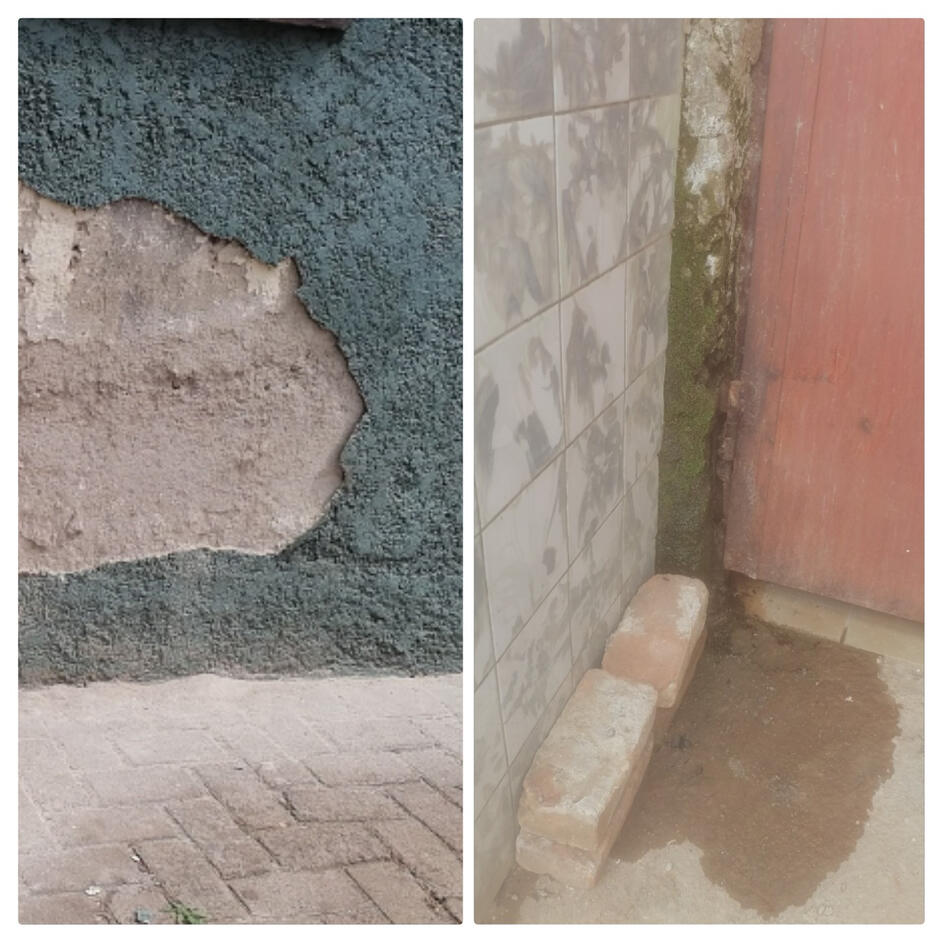
This photo shows an outside leaking sink due to tiling faulty that caused water to penetrate through the tiles until water finds its way out. the other photo shows poor workmanship that led a small portion of the plaster to collapse due to lack of cohesive.
6. SOLID FLOORS: It has the ability to retain moisture, which causes it to move sideways beneath the floor and onto the walls. If it is carried out by a competent damp surveyor, the issue can be resolved by creating a floor that breathes or by creating a tiny space between the floor and the wall to allow moisture to escape.
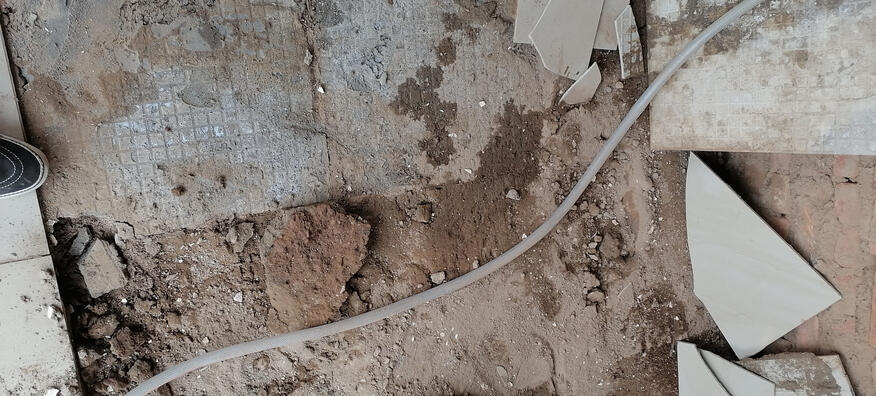
The photo above shows the moisture that found underneath tiles after removing them. the moisture pressure caused the tiles to pop up, this is common problem where water is trapped, causing cement-based grout adhesive to loose its bond. the water penetrated from high ground around the house
7. FAILED DAMP PROOFING: The most frequent source of moisture in wall buildings is the failure of the damp proof membrane, which prevents moisture and water from moving up in walls. The damp proof membrane must be laid correctly and sufficiently to prevent rising damp. I would like to let you know that over 90% of the houses I surveyed during the research DPM has miserably failed to stop moisture from moving up in the wall.
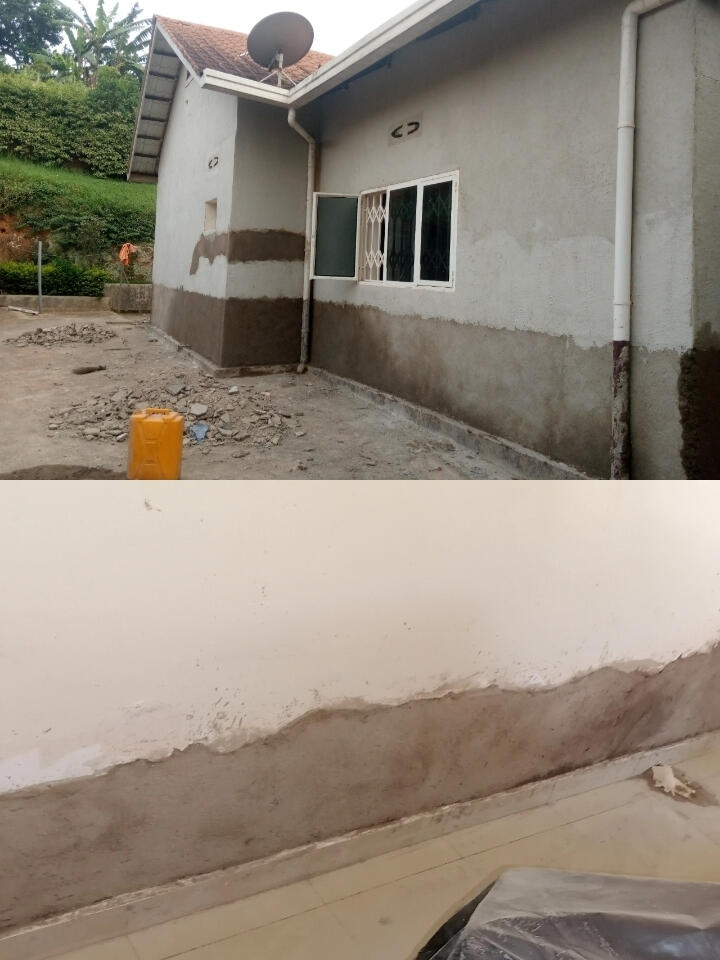
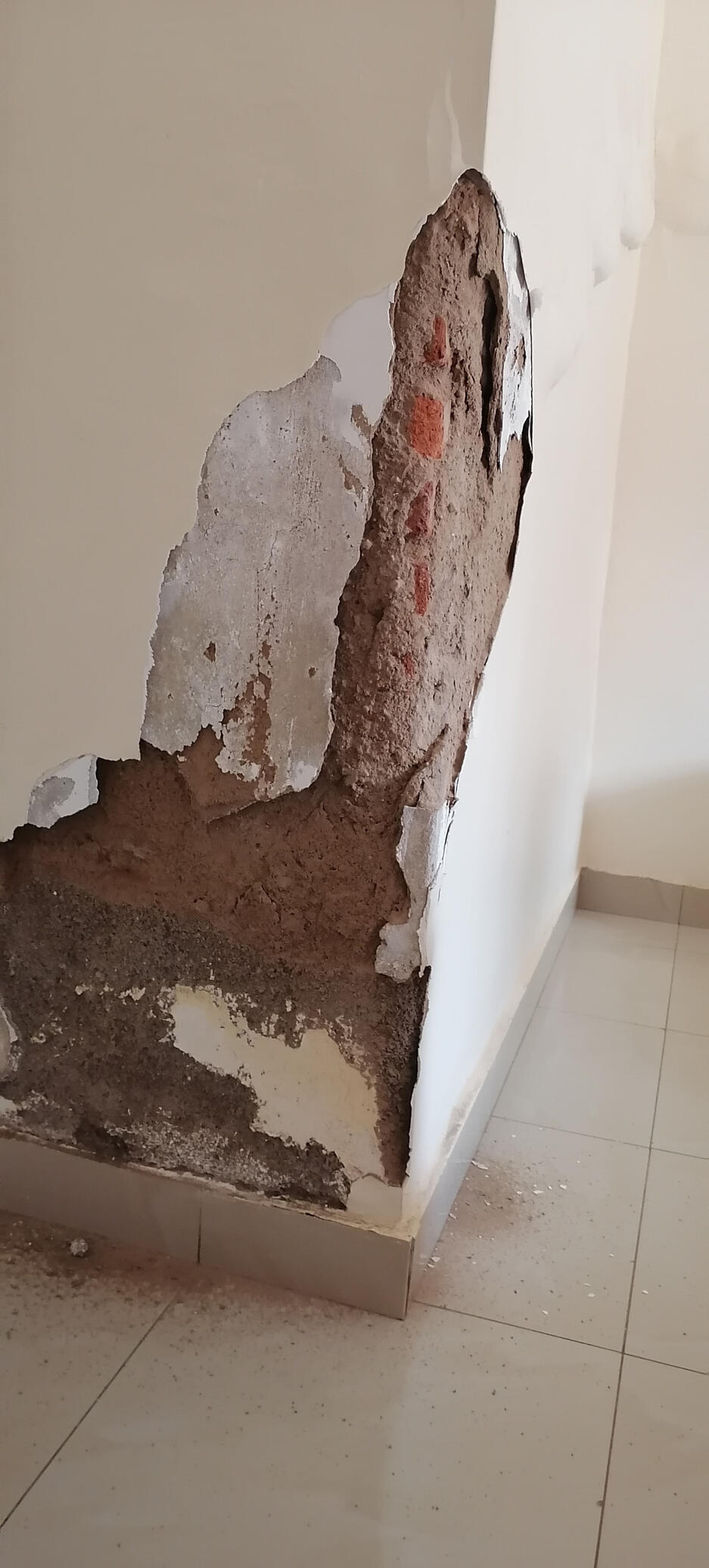
As you can see here on these photos , the failed DPM(damp proof membrane) is a very serious issue in construction. hence, when a DPM failed it creates a bridge between floor/foundation and walls which will transfer the moisture from foundation to the walls to cause moisture in building walls.
8. HIGH GROUND LEVEL:if the ground outside its exterior walls is higher than the internal floor level, you're inviting moisture. Building the house above ground level will enable the installation of a damp proof membrane (DPM), which will be a suitable remedy for the rising damp through porous materials. This is the solution to such dampness.
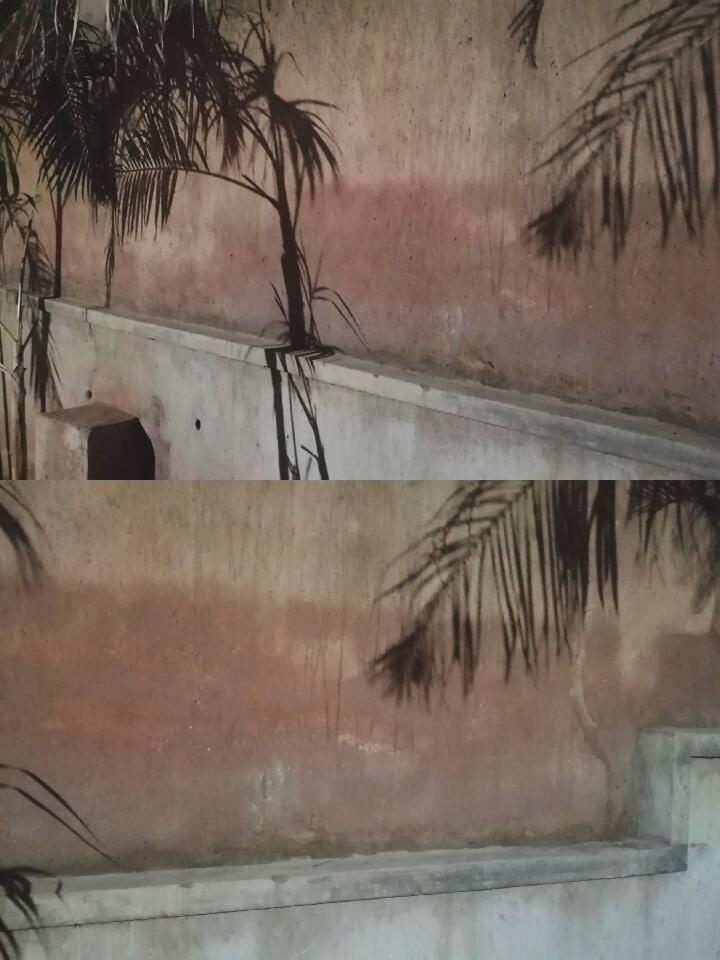
This wall showed a significant amount of moisture that is visible with our naked eyes. there is a high ground that is distributedon the other side of the wall
9. INEFFECTIVE WINDOW SEALS:Inadequate window seals may let moisture into your home. Cracked putty between the panes of glass or a lack of paint seal along the glass edges could be the source of this, which would allow moisture to accumulate and water to trickle in. below there is an example of a failed window seals
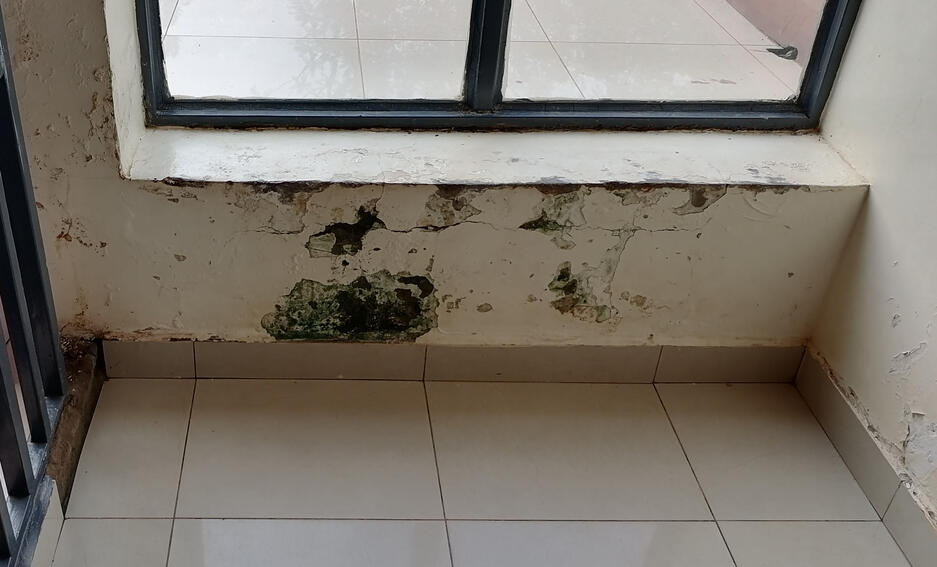
This window has suffered from the poor sealant that led the rain water to seep in always when the rai fell which caused mould growth.
10. POOR VENTILATION:lack of ventilation can cause dampness by retaining damp air indoors. This problem is common in areas like kitchens and bathrooms. Common indicators include condensation on walls and windows, which over time will lead to the growth of mould.
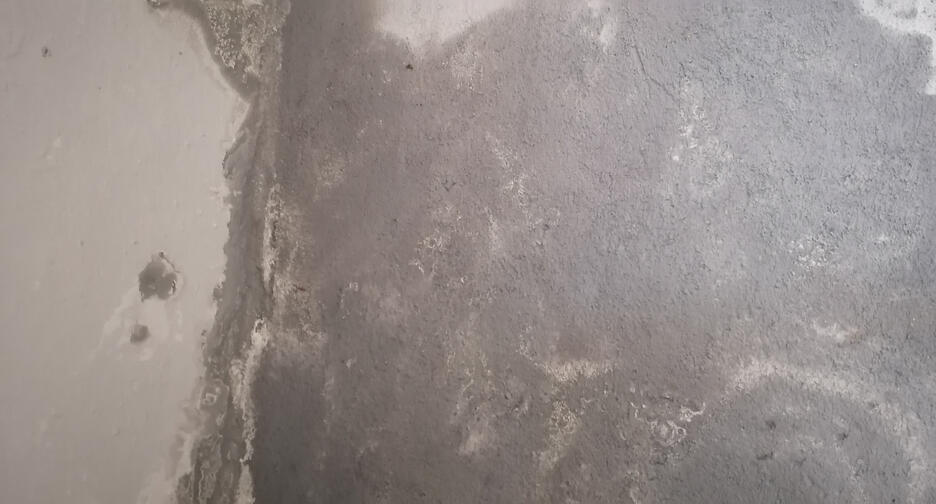
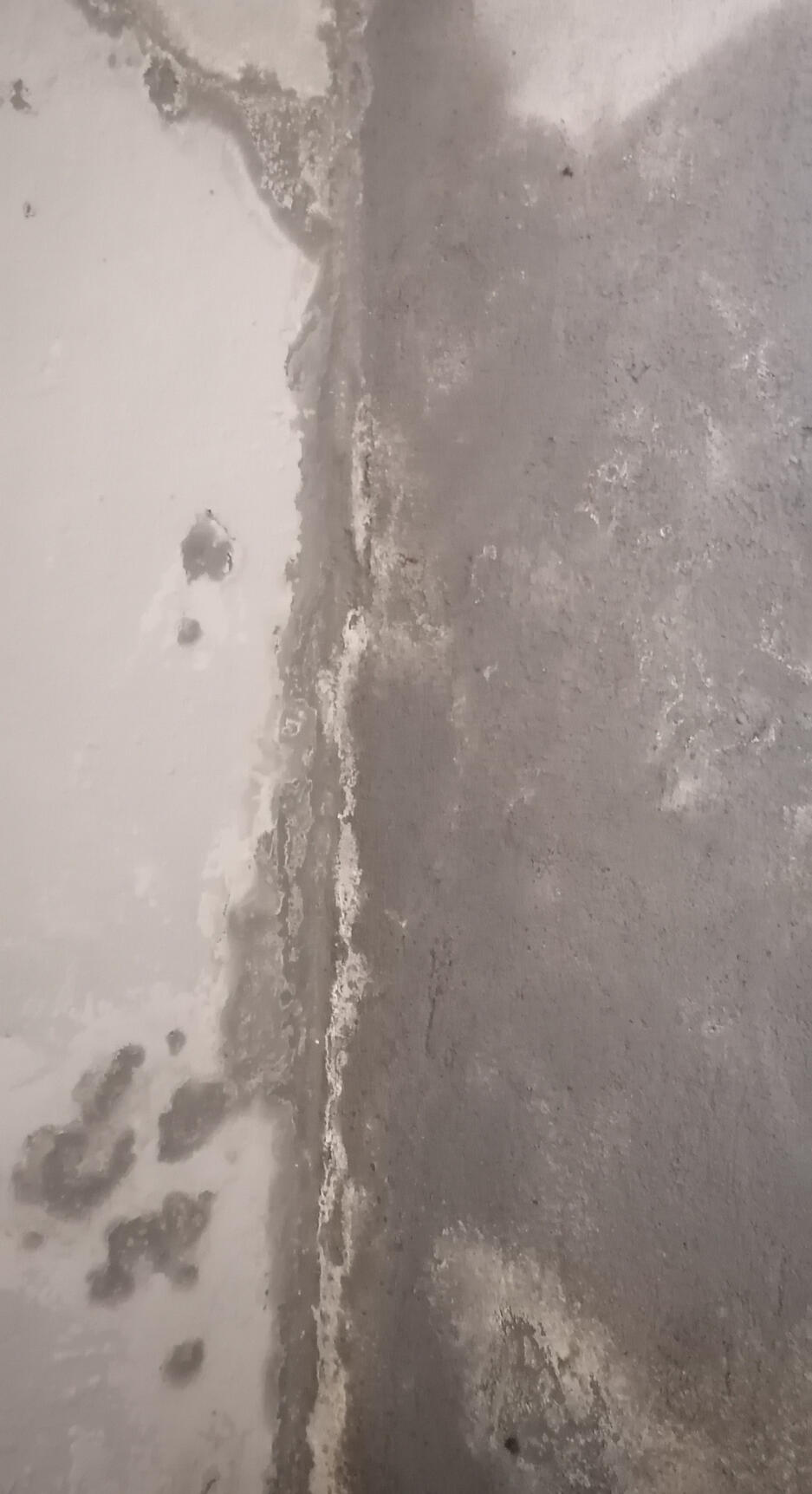
This room is kind of basement/cave, therefore the room needed a lot of ventilation to let the room have a lot of air to create a variable temperature. instead the room has always never had enough ventilation which created such level of moisture on that wall due to lack of constant warm air.
11. INEFFECTIVE GUTTER:
Leaking gutters can also result in damp walls. For example, a damaged downpipe that frequently spills too much water over the walls can result in moisture and the formation of mould on your walls. When a faulty gutter causes the rain to hit the same location on your external walls, it can result in a wet patch inside.
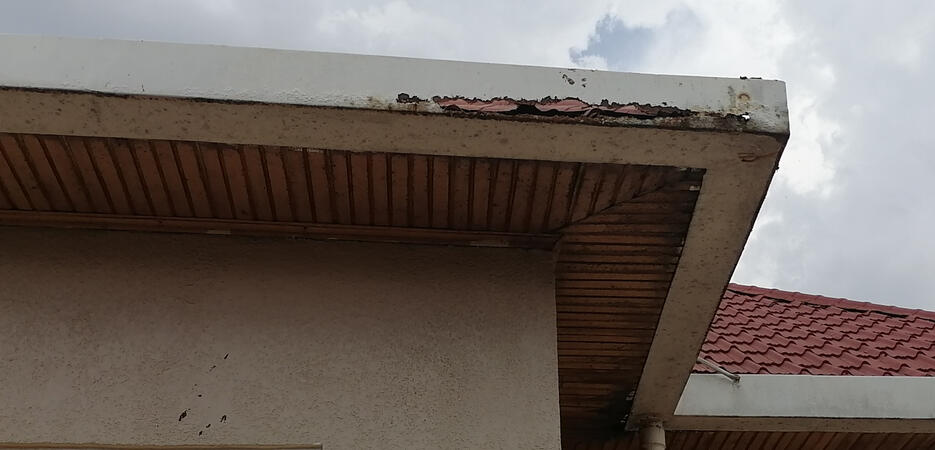
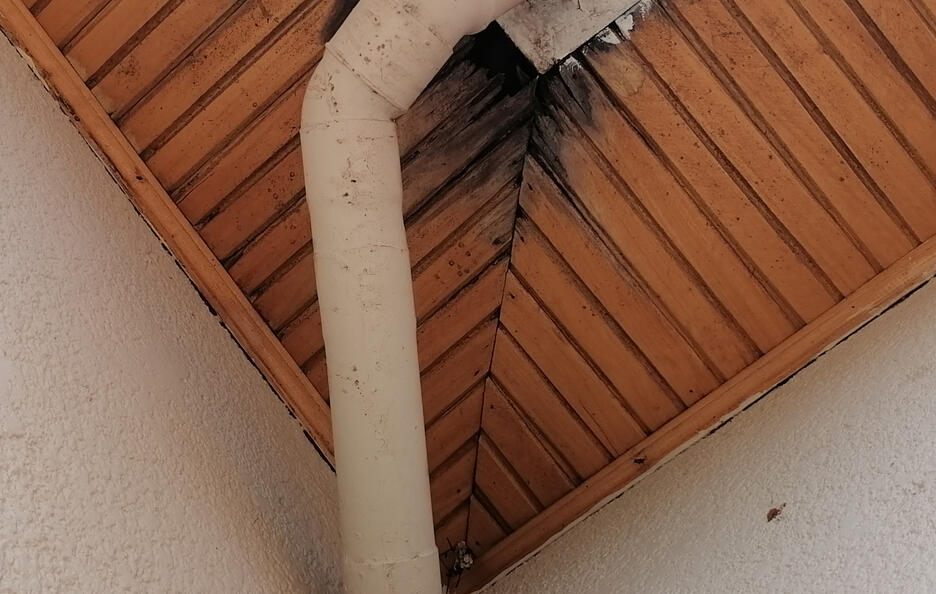
This house has an issue of gutter's inability to accommodate all the rain water from the roof which often causes the water to overflow the gutter and spill allover the soffit.
12. GROUND LEVELS:Since the surrounding water absorbs moisture, high ground water has a substantial impact on the probability of rising damp. As a rule, ground floors of houses were never constructed at or below the exterior ground level. On the other hand, ground levels may rise with time.
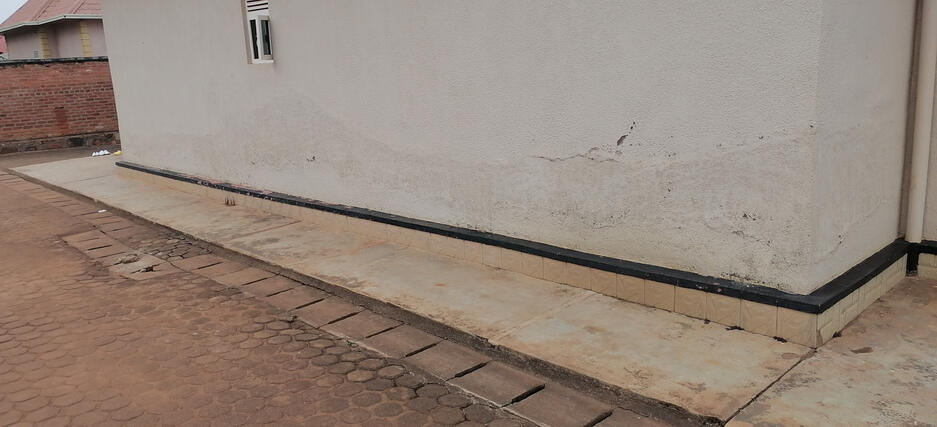
The pavers in the drive way are placed on higher ground than the level of the building foundation. when the rain fall somehow water manage to penetrate underground towards the foundation.
2. Property Condition Inspection
This is a thorough examination of the entire property. It highlights any issues or upcoming maintenance requirements while gazing into hiding places.
Three Types of Property Surveys1. Home Sellers report
2. Home buyers report
3. Property Condition reportProperty Buyer Report
This study examines the property’s key elements for potential risks and critical problems. Additionally, it assesses the property’s value and considers cost of insurance.Property Seller Report
This provides a brief overview of the state of the property. It displays any significant problems or defects that require fixing.Property Condition Report
This is a thorough examination of the entire property. It highlights any issues or upcoming maintenance requirements while gazing into hiding places.
Purpose of Property SurveyThe primary goal of a property survey is to help purchasers and sellers of property find building defects.
Below there are highlighted main goals of a property survey:
- Long-term cost savings
- Awareness of repairs
- Assistance in negotiating a better bargain
- Assistance in making a smart decision Before choosing to buyWhat is a property survey?A property survey is a procedure that a qualified surveyor undertakes. It is a thorough examination of a property’s state. They usually look at the house’s structure. When you buy or sell it.Benefits of property surveyPotential problems can be found early on, allowing the seller to make adjustments before listing their property and increasing its value and ability to be sold. This could result in a more rapid sale and more money for the seller. Making repairs in advance will reduce objections about issues that might be seen by a potential buyer as minor issues. However, when multiple small issues are combined, they can frequently become deal-breakers, particularly if a more serious issue is discovered during a building survey.The typical home buyer will only have made two visits and spent about forty minutes on the property. A surveyor will examine the property for hours in the property, DASUCO LTD will carry out a survey for you and make a report of property health which will serve as a basis for your decision before the purchase.The advantage of property survey-Your house might sell more quickly
-It might bring a higher price
-There will be no more purchasers leaving the house because they believe there is a problem
- the main problems will be fixed before you list your home
- buyers won’t back out when they discover the house isn’t perfect.Potential problems can be found early on, allowing the seller to make adjustments before listing their property and increasing its value and ability to be sold. This could result in a more rapid sale and more money for the seller. Making repairs in advance will reduce objections about issues that might be seen by a potential buyer as minor issues. However, when multiple small issues are combined, they can frequently become deal-breakers, particularly if a more serious issue is discovered during a building survey.Buyer BenefitsBefore making a purchase, a home buyer’s property survey is essential to comprehending the state of the property. Unexpected costs and threats could affect the property’s value for buyers. A survey can result in future savings and repair costs, making it a very advantageous investment for buyers. DASUCO is essential to completing accurate and thorough surveys.Seller BenefitMeeting customer criteria and keeping defects from reaching to the market are the main goals of inspection. You can fix any problems with the property and possibly raise its worth by recognising them before listing it for sale.
Would you like to have your home inspected, whether you wish to buy or put your house on sale? Do you have any query or want your moisture problems in building walls sorted? DASUCO LTD is ready to help you out, give us a call ASAP and we come to do a quick survey for you.